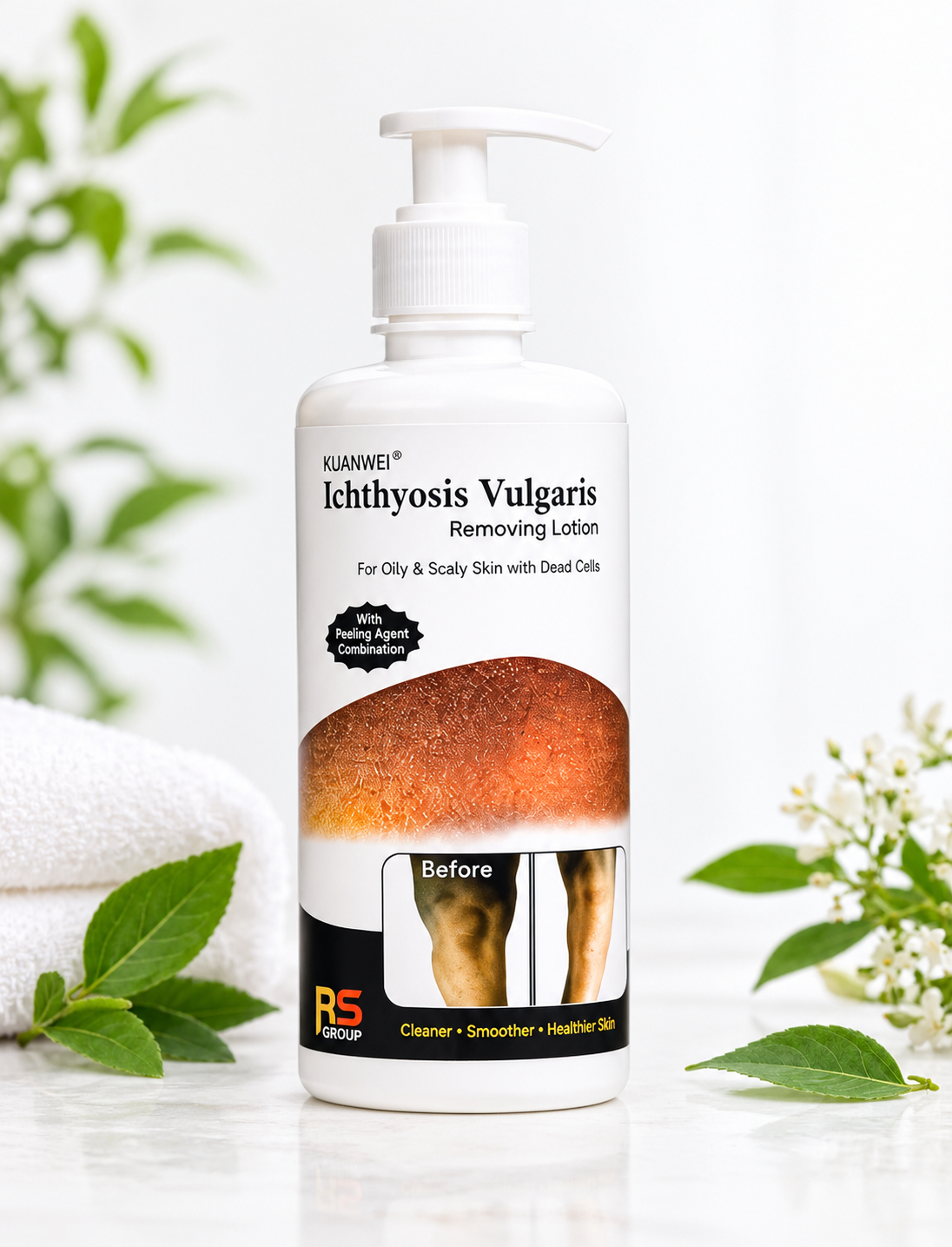
Ichthyosis Vulgaris Removing Lotion
Ichthyosis Vulgaris Ichthyosis Treatment Ichthyosis Removing Lotion Ichthyosis Skin Care Dry Scaly Skin Scaly Skin Treatment Dead Skin Removal Dry Skin Care Rough Skin Fish Scale Skin Ichthyosis Lotion Ichthyosis Vulgaris Care Kuanwei Removing Lotion Kuanwei Ichthyosis Care Very Dry Skin Skin Scaling Skin Peeling Body Skin Care Ichthyosis Management Skin Moisturization
Ichthyosis vulgaris is a common skin condition in which the skin becomes unusually dry, rough and covered with visible scales. For many people, especially on the legs, arms and body, these scales can become thick and difficult to remove with normal bathing or moisturizers alone.
A proper skin-care routine can help manage the buildup of dead and dry skin while keeping the skin moisturized.
Ichthyosis vulgaris is a genetic skin condition associated with excessive dryness and accumulation of dead skin cells. The skin may appear rough, flaky or covered with fish-scale-like scales.
Commonly affected areas include:
Legs and thighs
Arms
Back
Abdomen
Other areas of very dry skin
The severity can vary from person to person, and symptoms may become more noticeable during dry or cold weather.
Normally, old skin cells are continuously shed from the surface of the skin. In ichthyosis vulgaris, this natural shedding process can be altered.
As a result, dead skin cells may accumulate on the surface, making the skin look:
Thick
Rough
Flaky
Scaly
Extremely dry
Simply applying a moisturizer over a thick layer of accumulated scales may not always provide the desired result. Skin care often needs to address both scale buildup and dryness.
An ichthyosis vulgaris removing lotion is designed to help loosen and remove accumulated dead and thickened skin from the surface.
Such products may contain keratolytic or peeling ingredients that help soften the bonds between dead skin cells, making excessive scaling easier to shed.
The goal is not to aggressively peel or scrub the skin. The objective is to gradually improve the appearance and texture of excessively scaly skin while supporting a regular skin-care routine.
A typical routine may involve:
Step 1 – Soften the skin
After bathing, gently pat the skin dry rather than rubbing it aggressively.
Step 2 – Apply the removing lotion
Apply the appropriate amount to areas affected by excessive scaling, following the product instructions or advice from a dermatologist.
Step 3 – Moisturize
Once excessive scaling is controlled, regular moisturization is important because ichthyosis-prone skin can become dry again.
Step 4 – Maintain the routine
Ichthyosis vulgaris is generally a long-term condition. Stopping skin care completely after the skin improves may allow dryness and scaling to return.
Moisturizers are extremely important for dry skin, but heavily accumulated scales may require additional care.
A complete routine may therefore involve two different goals:
Removing excessive scale → Maintaining hydration
This is why an appropriate scale-removing product and a good moisturizer can have complementary roles.

For people looking for a structured routine, the Kuanwei care approach includes separate products for different skin-care needs:
The removing lotion is intended to help loosen accumulated dead and scaly skin.
i16 Lotion is used as part of the moisturizing and skin-maintenance routine, particularly for very dry and rough skin.
Clobetsalic is a steroid-containing medicine and should not be used casually or continuously without medical guidance. It may be prescribed for areas with significant inflammation or itching.
These products have different purposes and should not be considered substitutes for one another.
One of the biggest misunderstandings about ichthyosis vulgaris is expecting a one-time application to permanently eliminate the condition.
Because ichthyosis vulgaris is a genetic skin condition, skin dryness and scaling can return when regular care is stopped. Weather, bathing habits, environmental dryness and individual skin characteristics can also influence symptoms.
Therefore, improvement should be viewed as ongoing skin management rather than a one-time treatment.
Along with an appropriate routine, these habits may help:
Avoid very hot water.
Avoid aggressive scrubbing.
Do not forcibly peel scales with nails.
Use gentle cleansing products.
Moisturize regularly.
Pay extra attention to dry areas after bathing.
Maintain your routine even after the skin improves.
Seek medical advice if there is significant redness, pain, infection or severe itching.
There is no single timeline that applies to everyone.
The response can depend on the severity of scaling, skin type, consistency of the routine, weather and other individual factors.
Regular use is generally more important than expecting an immediate result from a single application.
Ichthyosis vulgaris requires consistent skin care because dryness and scaling can be recurring problems. A practical approach is to address excessive scale buildup first and maintain hydration regularly.
An ichthyosis vulgaris removing lotion can be part of this routine by helping loosen accumulated dead skin, while a moisturizer such as i16 Lotion can support ongoing hydration.
If itching or inflammation is significant, medicines such as Clobetsalic should only be used according to appropriate medical advice.
Remember: ichthyosis vulgaris is a long-term skin condition, and individual results can vary. Consistent skin care is an important part of managing dry and scaly skin.


